

How to care for your clothes properly
Wash garments frequently, as dirt wears them out more than washing does. Regular washing and maintenance are key, especially for preserving the protective properties of fabrics and the durability of fastening elements such as zippers.
Always follow the care instructions on the product.
Close all fastenings (Velcro, snaps, buttons, zippers) before washing to make them last longer and to prevent them from damaging the surface of the garment during the wash.
Wash the garment inside out. If the garment is particularly dirty, it may be necessary to wash it right side out so that stains come off more easily.
Do not use fabric softener or bleach.
Avoid soaking, especially for garments that contain reflective tape.
Do not iron the reflectors.
Shape the garments while damp.
Over-drying in a tumble dryer may shrink and damage garments. Remove the clothes while they are still slightly damp.
Dry/air out clothes that have become damp during use to prevent odors from penetrating the materials.
Preferably store garments on hangers, protected from sunlight.

(certified EN ISO 20471)
Care instructions for high-visibility garments
Wash high-visibility garments only together with other certified high-visibility garments that have the same care instructions. Other garments may bleed color, which will reduce the visibility properties of the products.
Follow the product care instructions.
Do not use fabric softener/bleach, as they damage the reflectors.
Close all fasteners before washing.
Do not iron the reflectors.
Shape the garments while damp.
Preferably store garments on hangers, protected from sunlight.
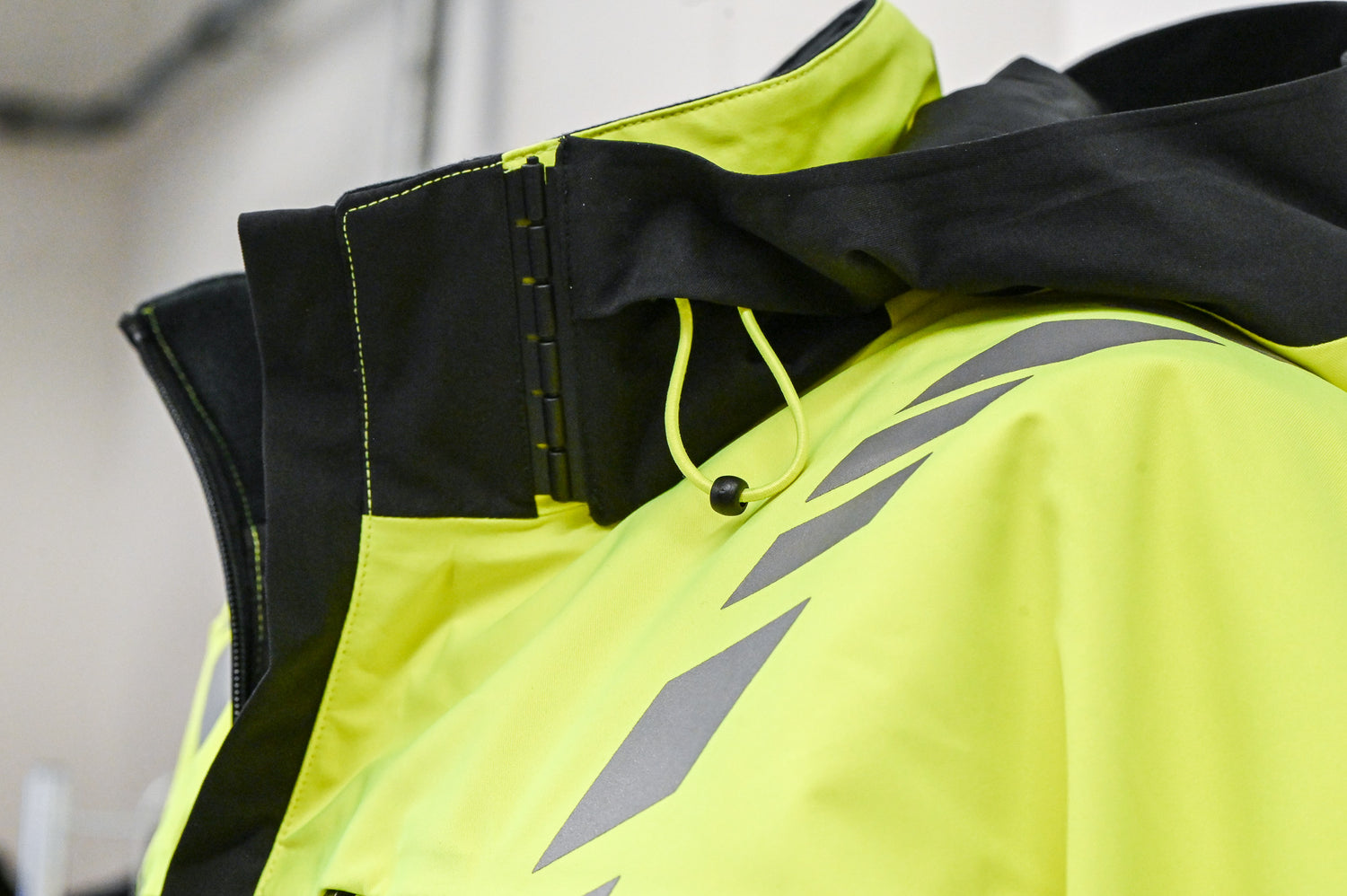
Care instructions for shell garments
Wash shell garments only with other garments that have the same certification and care instructions.
Follow the product care instructions.
Close all fasteners before washing.
Do not use fabric softener or bleach, as they damage the fabric membrane and the reflectors.
You can use a liquid detergent intended for membrane garments to avoid damaging the fabric’s membrane.
You may use a tumble dryer, but follow the care instructions carefully. Heat reactivates the water-repellent finish of the fabric.

Care instructions for flame- and soil-protected workwear
The flame retardant treatment is applied to the fabric by impregnating it with a chemical after weaving. This process ensures that the chemical penetrates deep into the fibre and does not wash out.
The flame-retardant reflective tapes used in the products have been tested at 75°C (industrial wash) after 40 wash cycles and at 60°C (domestic wash) after 100 wash cycles. Standard-compliant tests on the fabrics have been carried out at 75°C (industrial wash) after five wash cycles. The standards define the number of wash cycles, and five washes is the minimum required to ensure that the fabrics meet the required protective properties.
Dimex’s multistretch fabrics have been tested at 60°C (domestic wash) after five wash cycles.
When welding or when sparks hit the fabric, holes may form, which is normal for flame-retardant fabrics. The fabric functions correctly when it does not ignite or continue to burn. In other words, it does not sustain burning but self-extinguishes. The fabric still meets flame-retardant requirements even if holes appear during welding. Flame-retardant fabrics are not completely non-combustible.

Care instructions for merino wool garments and accessories
If a wool garment is not dirty, air it out and let it rest between uses. This way the wool fibre best regains its natural strength and elasticity.
Follow the product care instructions.
Close all fasteners before washing.
For example, we recommend using a laundry bag for beanies or socks.
Use a detergent intended for wool.
Do not use fabric softener or bleach.
Reshape wool garments while damp.
Spread the wool product out to dry flat on a horizontal surface (for example on top of a drying rack).

Zipper care instructions
Always close the front plackets during use.
Always open the zipper all the way down when putting the product on or taking it off. This way you avoid damaging/breaking the zipper mechanisms.
Avoid using excessive force when operating the zipper.
Wash garments frequently, as dirt wears out zippers more than washing does.
Remember to close zippers and any front plackets during washing.
If too much dirt gets into the chain parts, the upper part of the slider is pushed outward and causes the slider to loosen, meaning the chain will no longer stay fastened. You can gently tighten a loose slider with pliers from both flat sides, but make sure that the gap in the slider does not become smaller than the one in the bottom stop.
